
In modern marketing, vanity metrics are easy to produce. Impressions, reach, and clicks look impressive in slide decks, but they don't pay salaries or scale balance sheets. At RedSan, every strategic recommendation and growth sprint is grounded in financial discipline: gross revenue, qualified pipeline, and unit economics.
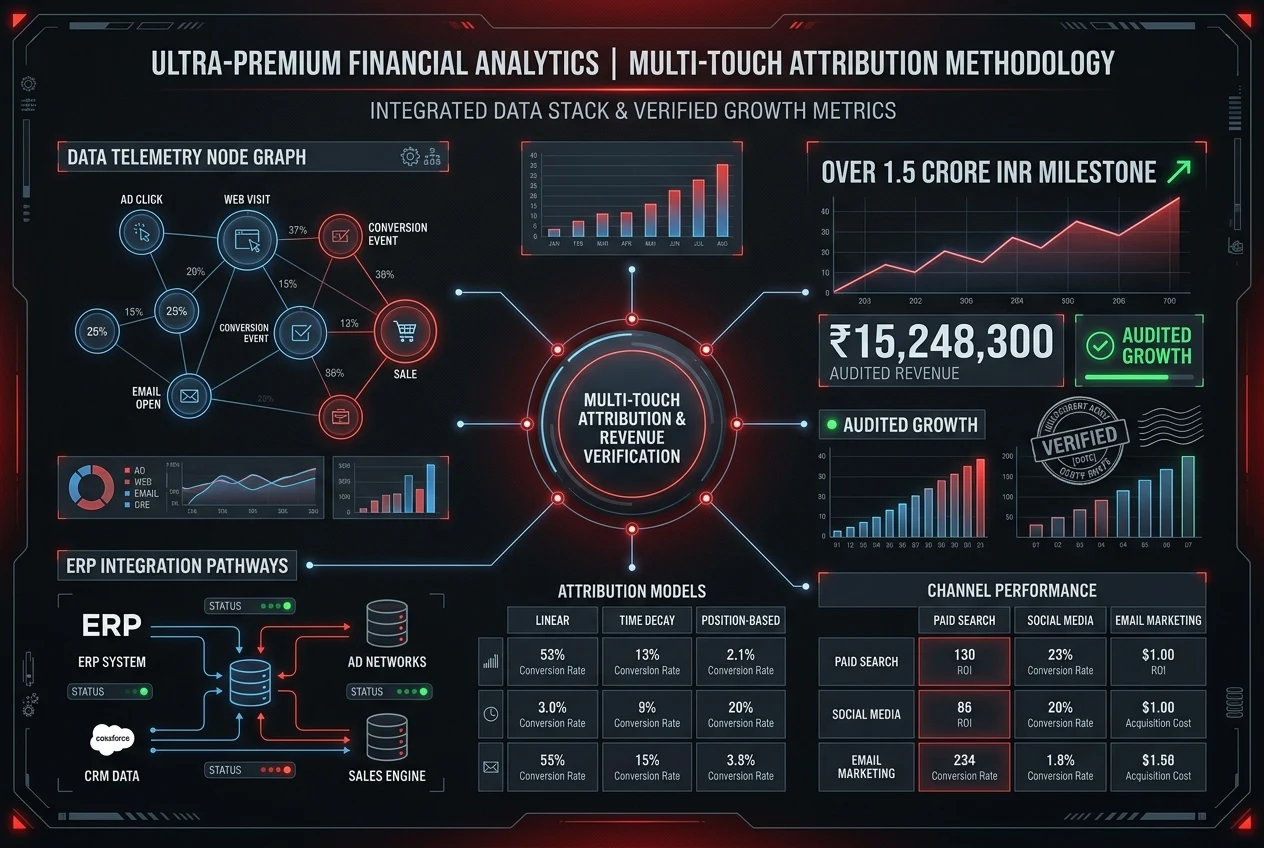
When we state that RedSan has built or influenced ₹1.5Cr+ in top-line revenue from zero for founders and early-stage companies, we hold ourselves accountable to strict data verification. This document provides complete transparency into how that figure is tracked, calculated, and attributed.
At a Glance: Milestone Parameters
1. What the Milestone Represents
The ₹1.5Cr+ milestone reflects aggregate top-line gross merchandise value (GMV) and verified closed contract revenue directly generated or substantially influenced across client engagements managed by RedSan Digitals Pvt. Ltd. between late 2024 and mid-2026.
It represents businesses where RedSan designed, deployed, and managed the complete customer acquisition infrastructure: from high-converting web architecture and creative asset production to paid acquisition and search dominance.
2. Multi-Touch Attribution Framework
To avoid double counting and ensure mathematical rigor, revenue is attributed across three distinct channels:
A. Direct-to-Consumer (D2C) E-Commerce GMV
- Data Source: Shopify and WooCommerce first-party transactional databases reconciled against payment gateway settlement sheets (Razorpay, Cashfree, Stripe).
- Attribution Window: 7-day click / 1-day view attribution window via Meta Conversions API (CAPI) and Google Analytics 4 (GA4) data-driven attribution models.
- Deductions: Documented order cancellations, Return to Origin (RTO) parcels, and customer refunds are deducted from reported gross revenue.
- Case Example: Read our detailed breakdown in the D2C Scaling Case Study, where monthly revenue scaled by 340% within 90 days.
B. High-Intent Organic Search & Generative Engine Inquiries
- Data Source: CRM deal pipeline status (HubSpot, Zoho, or client internal ERPs) tied to unique UTM parameters and dedicated call-tracking numbers.
- Qualification Standard: Deals are only counted when contract execution or advance milestone payments are verified by client finance leads.
C. High-Intent Paid Search (Google Ads)
- Data Source: Google Ads offline conversion imports matched against verified closed sales, ensuring that ad spend is mapped strictly to realized cash flow rather than theoretical leads.
3. Why We Exclude Pure Paid "Vanity" Multipliers
Many agencies claim inflated numbers by multiplying ad spend by unverified platform reported ROAS. Ad platform dashboards frequently take full credit for organic buyers or existing customer re-purchases. At RedSan:
- We measure Blended Marketing Efficiency Ratio (MER): Total Revenue divided by Total Marketing Spend.
- We isolate new customer acquisition (NC-CAC) from existing customer retention.
- We track contribution margin to ensure growth is profitable, not subsidized by venture burnout.
4. Portfolio Composition & Sectors
The ₹1.5Cr+ figure is distributed across 14+ client partnerships and founder consulting cohorts in key sectors:
- D2C Lifestyle & Home Decor: Creative-first paid social acquisition, Advantage+ shopping campaigns, and server-side tracking.
- B2B & Professional Services: High-intent local search dominance across Delhi NCR, Gurugram, and Chandigarh, backed by authority content.
- EdTech & Professional Skill Workshops: End-to-end launch funnels, WhatsApp automation workflows, and high-converting landing pages.
5. Forward-Looking Disclaimer
Documenting historical milestones is designed to demonstrate methodology, engineering rigor, and execution capability. However, past performance does not guarantee identical future results for any individual brand or founder.
Every commercial engagement depends on multiple interdependent variables: product-market resonance, inventory fulfillment, pricing power, customer service quality, and economic market conditions. RedSan does not guarantee specific revenue outcomes. Instead, we engineer the highest-probability digital systems to capture market demand efficiently.