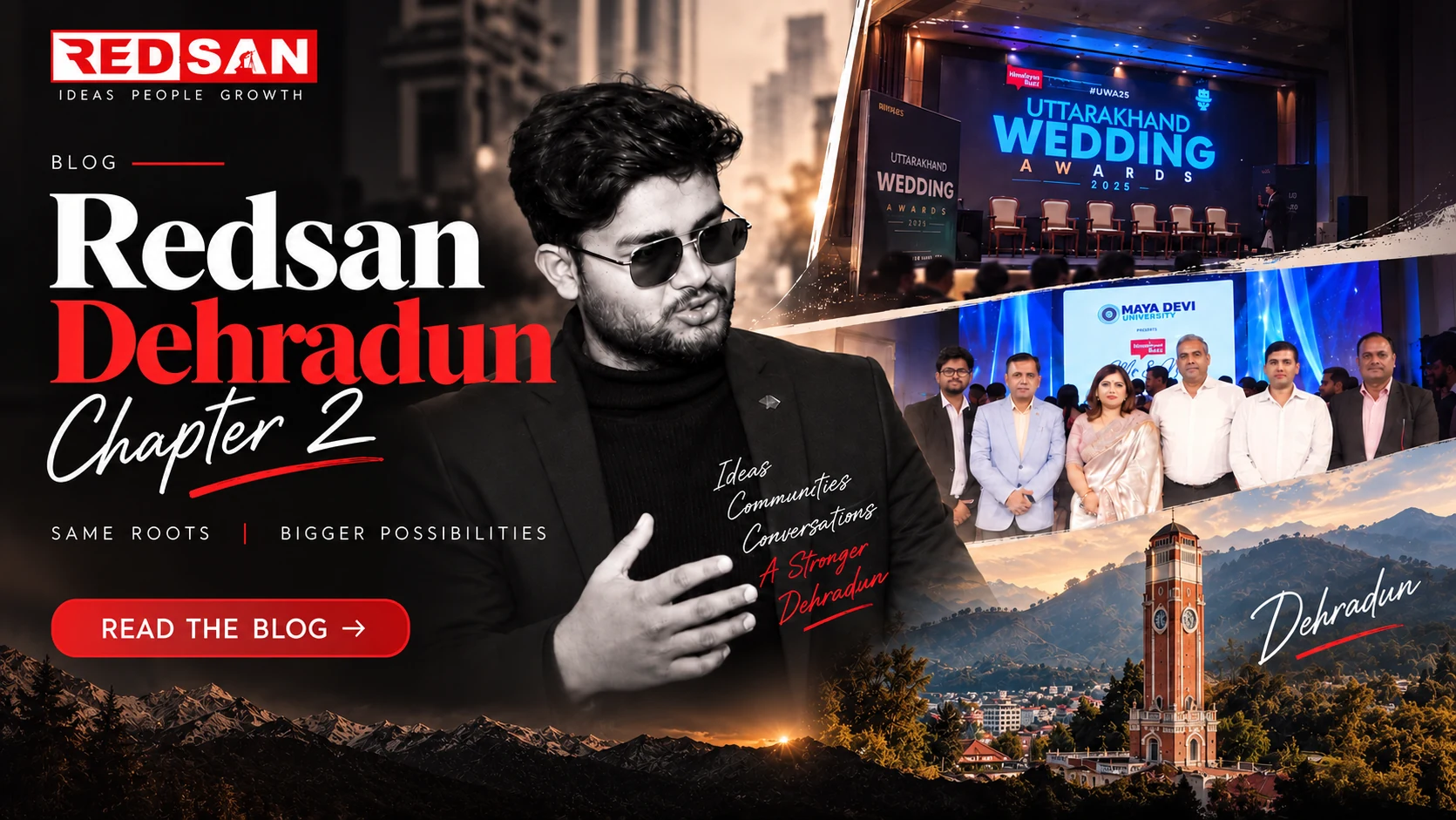
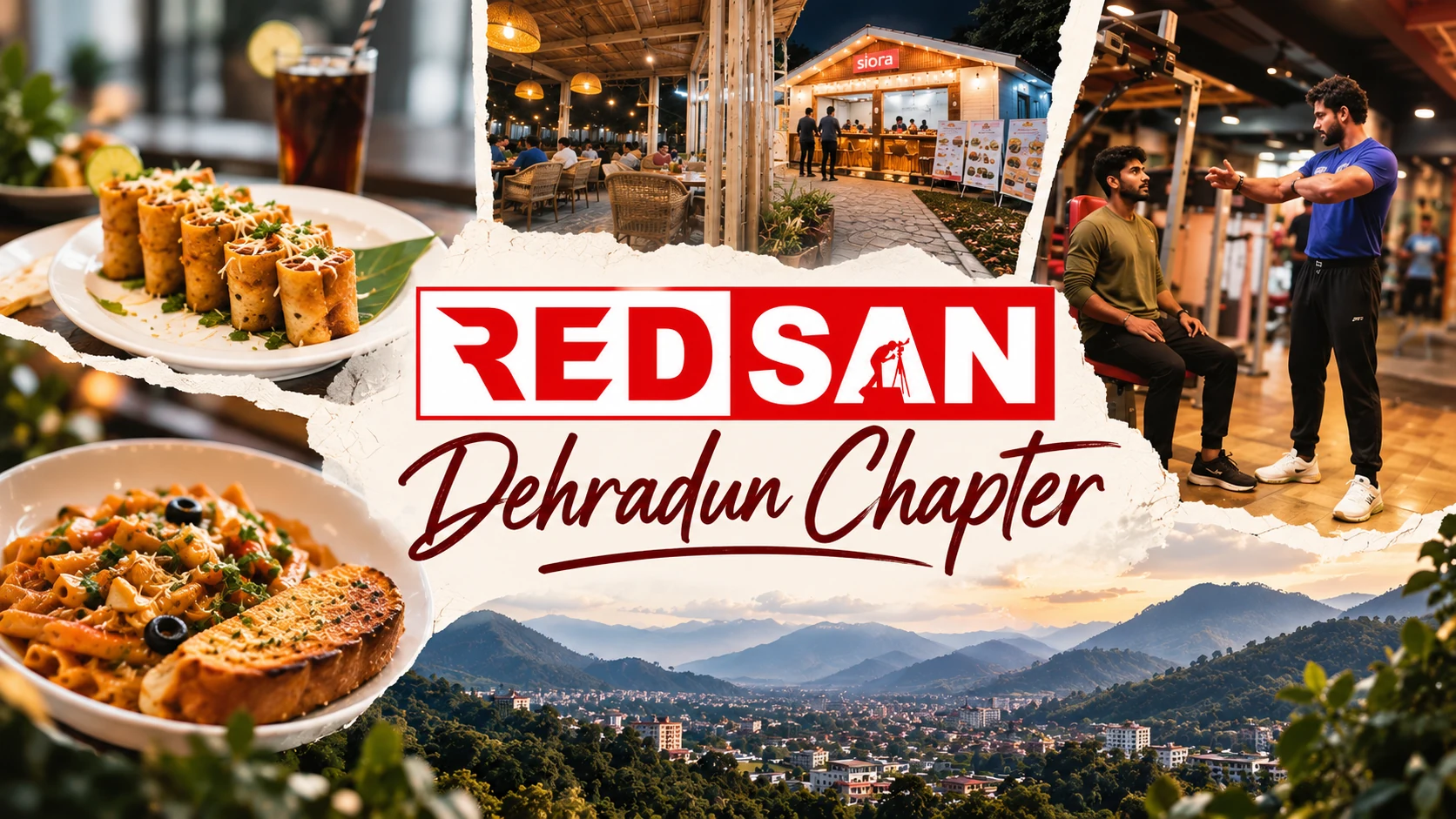
Every growing company has a geographic turning point. For Redsan, that turning point was Dehradun in 2023.
Our Chandigarh chapter was where Redsan proved it could win clients and execute campaigns. In Kharar and the Tri-city corridor, we learned the fundamentals of creative hustle: shooting videos on cafe tables, pitching local business owners, and delivering social content under tight deadlines. We knew how to operate as an agency.
Operating as an agency, however, is not the same as building a company. An agency can survive for a while on the sheer stamina of its founder and a few passionate freelancers. A company requires infrastructure, repeatable workflows, institutional trust, and people who can execute consistently even when the founder steps out of the room. Dehradun was where we had to confront that reality.
2023: Leaving Chandigarh, Building a Home in Dehradun
Why Dehradun? And why 2023?
By late 2022, the work we were producing in Punjab had given us confidence, but we wanted a permanent base. We were not looking for a temporary satellite desk; we wanted a city where we could set down roots, establish our formal headquarters, hire full-time colleagues, and become an active participant in an evolving commercial market.
Dehradun offered a distinctive landscape. It was a regional capital experiencing steady commercial expansion: an influx of education conglomerates, hospital chains, ambitious culinary entrepreneurs, and traditional family businesses recognizing that word-of-mouth alone could no longer protect their local dominance. The market had creative demand, but it lacked teams willing to combine ground-level production with structured strategy.
We packed our camera gear, moved across state lines, and arrived in the Doon valley with a clear conviction: we were here to build something that would last.
First Institutional Anchor: Uttaranchal University
When entering an unfamiliar city, young agencies usually make cold calls or knock on store doors. We chose a different path: we sought an institutional anchor.
Redsan's Dehradun chapter formally took root when the company was accepted into the startup incubation program at Uttaranchal University. It is important to be precise about this relationship: Uttaranchal University was not simply our "first client." It was our incubator.
Under the direct mentorship of Dr. Rajesh Singh and Dr. Anita Gehlot, incubation provided Redsan with what an early-stage venture needs most: institutional legitimacy, physical workspace infrastructure, academic guidance, and regional grounding. Being hosted inside an established university environment gave our young enterprise credibility that would have taken years to earn on the street.

In return, we brought real-time digital marketing execution to the campus. We collaborated on student-centric content campaigns, helping grow the university's official community presence from 8,500 to over 10,000 active followers. The campus became our daily laboratory for testing content pacing, video formats, and community interaction.
The First Reel: Building UIM's Instagram
Before there was a team, there was a camera, an idea, and a founder doing the work himself.
Within the university ecosystem, one of our earliest mandates was helping establish and launch the official Instagram handle for the Uttaranchal Institute of Management (UIM). When that account was created, it had zero followers, zero posts, and no established visual voice.
Redsan's founder personally walked the campus halls, set up the frame, filmed the clips, edited the audio timeline, and published the very first reel on that handle. There was no production coordinator or post-production suite: just direct execution to get the project off the ground. Over time, through continuous student engagement and collaborative storytelling, that handle grew past 11,000 followers and established itself as an active hub for the institute.
As the workload expanded, we brought in external expertise to support channel management. The profile was later managed by Krrish Maindola, who was outsourced as a specialist to assist our crew while handling his own engagements, and has since gone on to establish his own agency, Digitalurlife. This was an early indicator of how Redsan would collaborate: bringing dedicated talent into specific projects when execution demanded focused attention.
Entering Dehradun's Business Landscape
University incubation gave us stability, but our ambition was never limited to campus boundaries. We wanted to test our skills against the real market: local retail, fitness, dining, and hospitality.
Moving from institutional communication to commercial accounts required adjusting our pacing. Businesses did not evaluate success by academic metrics; they measured foot traffic, table reservations, membership signups, and customer feedback. Each new sector we entered taught us a distinct operational lesson.
From Cafes to Restaurants to Fitness
Rather than chasing vanity accounts, our client progression unfolded through specific categories, with each relationship adding a new layer to our operating capabilities:
- › Fitness & Culture (Golds Gym Dehradun): Drawing on our prior fitness production experience from Kharar, we partnered with Golds Gym Dehradun to produce high-energy workout and culture reels (Reel 01 and Reel 02). Fitness shoots demanded rapid lighting adjustments, athlete coordination, and dynamic pacing that kept audiences engaged in the first two seconds.
- › Heritage Retail & Confectionery (Elloras Melting Moments): Working with one of Dehradun's most recognizable heritage bakery names meant handling brand equity with care. We collaborated on high-visual promotional video reels, focusing on tactile confectionery craftsmanship and the nostalgic relationship the city maintains with the brand.
- › Multi-Location Hospitality (Turkish Dastarkhwan Restaurant): Handled digital media strategy and content creation as the brand operated across two distinct locations: one near Nanda ki Chowki, and the second near the UPES Bidholi campus (Instagram Profile). Managing communication for two branches taught us how different student demographics respond to dining promotions across opposite ends of town.
- › Youth Nightlife & Dining (Amnesia Cafe Dehradun): Created social creative campaigns and dining highlights for Amnesia Cafe, learning how to capture atmosphere, evening lighting, and weekend event excitement.
The Roasted Culture Chapter: SIORA, Gunpowder & Professional Production
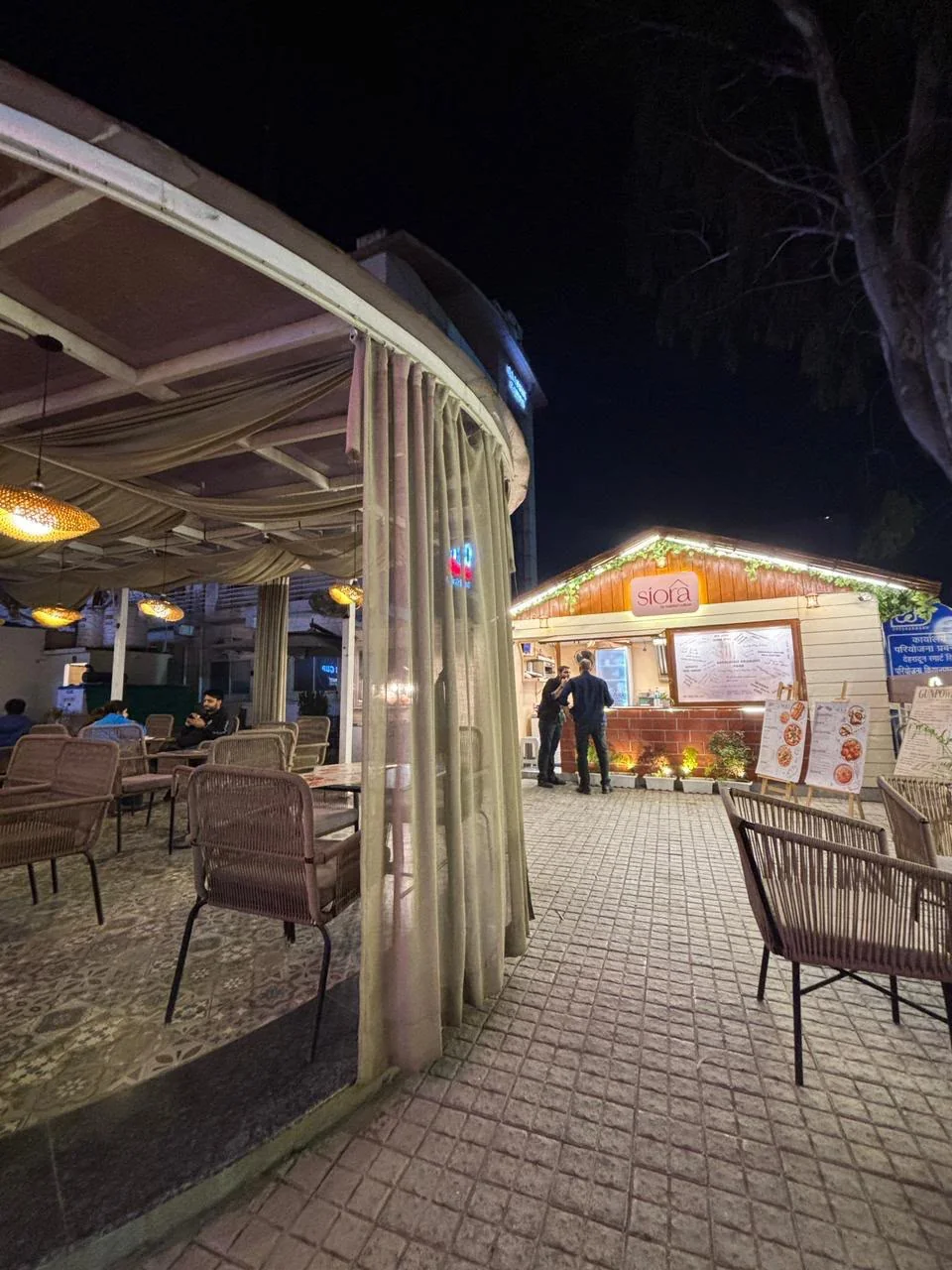
Our work in Dehradun's hospitality landscape reached higher production complexity when we partnered with the Roasted Culture restaurant collective. That collaboration began with SIORA by Roasted Culture (@siorabyroastedculture).
SIORA gave our young production team direct exposure to high-profile creative talent. During on-site filming, our crew had the opportunity to work on location with veteran actor Mr. Manish Wadhwa (widely acclaimed for his performance as Chanakya). Working around seasoned artists taught us the importance of punctuality, structured shot lists, and professional conduct behind the camera.
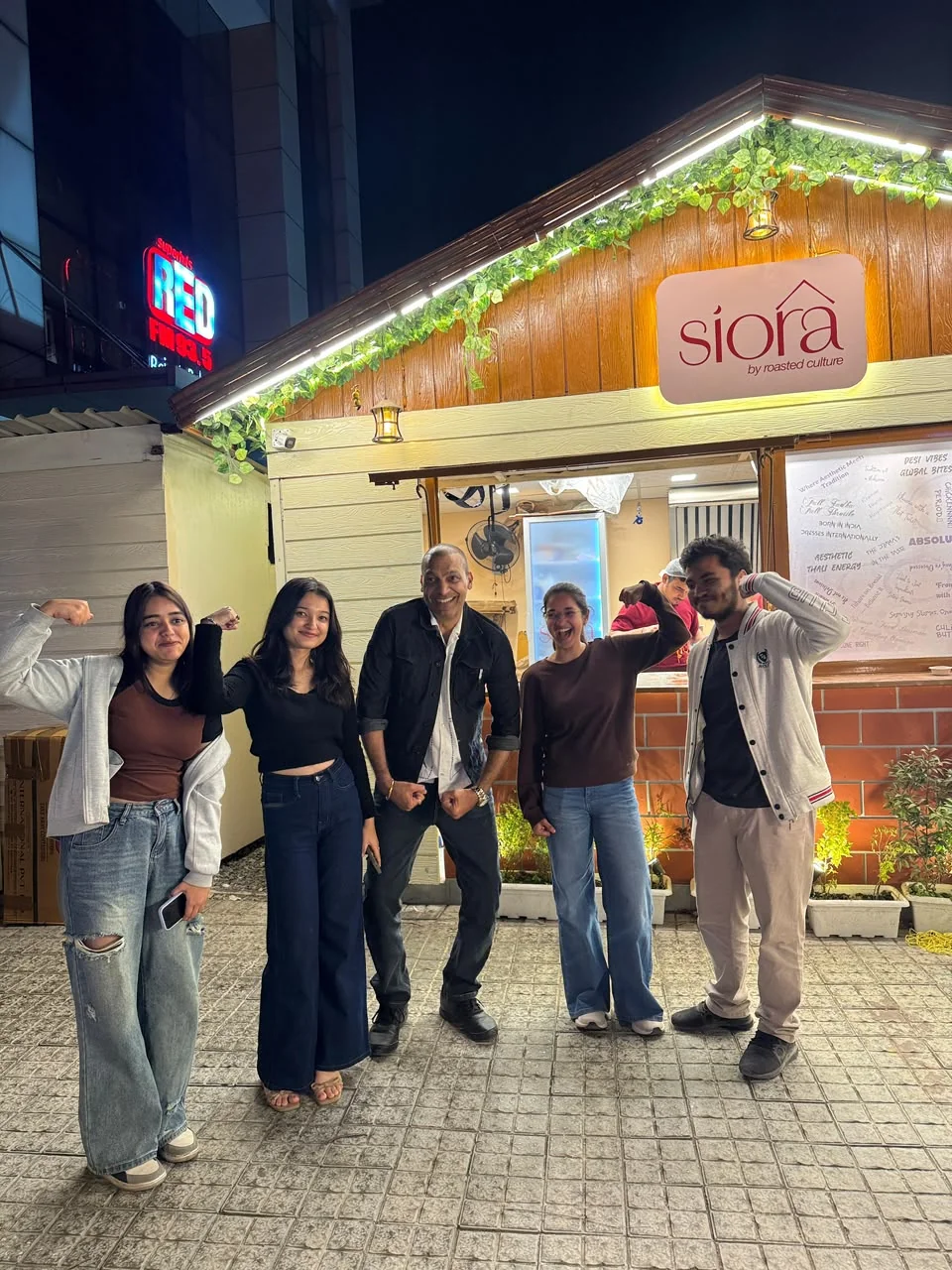
In addition to on-location work with Mr. Manish Wadhwa, our post-production team edited and packaged promotional video content featuring reviews from other public figures, including actor-comedian Faruqui Lilliput and Bollywood playback singer Shahid Mallya.
Following SIORA, we took on social media deliverables for Gunpowder by RC (@gunpowderbyrc) and separately partnered with OG-Chaap (@ogchaap). Within months, our team was coordinating shoots across Dehradun's primary dining stretches on a weekly basis.
The Hard Lesson: When Growth Outran the System
No honest company history is a continuous victory march, and we refuse to edit out the chapters that tested us. Taking on multiple fast-paced cafes, multi-location restaurants, and corporate accounts simultaneously pushed our early operational capacity to its absolute limit.
Our creative output was visually strong. The photographs looked good, the video cuts were dynamic, and engagement was climbing. But behind the scenes, our operational systems were still immature. We were operating on enthusiasm and caffeine rather than documented processes.
Deliverables were delayed. Revision notes slipped through WhatsApp threads. Technical miscommunications happened between filming and editing teams. Clients gave us fair, direct, and critical feedback about turnaround timelines. When you promise a client five reels a week and deliver them late because someone was editing footage until 4 AM without a render schedule, enthusiasm is no longer an acceptable defense.
- We authored formal Standard Operating Procedures (SOPs) for every production stage.
- We created transparent approval queues so client feedback lived in one documented thread.
- We stopped expecting generalists to juggle cinematography, copy, client relations, and color grading at the same time.
- We established disciplined turnaround commitments that protected both client expectations and team sanity.
We do not claim that we became flawless overnight. But that painful period marked the moment Redsan stopped operating like an ad-hoc production group and started behaving like an organized business.
The People Who Built the Early Redsan
Companies are remembered by their logos, but they are built by people who show up when the work is unglamorous.
None of the systems or growth that followed would exist without the core teammates who worked through those demanding months in Dehradun. They carried heavy tripod bags across town, managed difficult shoots in crowded dining rooms, and stayed up through the night to fix editing timelines.
Our genuine respect goes to the teammates who stood with Redsan during that formative chapter: Tushar, Ajay Raj Negi, Animesh Dabral, Rohit Negi, Hussain Ahmed, and Umar Gaur, alongside expert outsourced support from Krrish Maindola. Acknowledging the people who stood shoulder to shoulder during the hard, imperfect days matters far more than listing vanity client logos.
Expanding Beyond Hospitality: The Gyanada International School
As our internal workflows matured, we took on work that required a completely different strategic register: educational marketing for The Gyanada International School.
Managing an educational institution forced our team to step outside high-energy culinary reels and master long-cycle communication. Parents do not choose a school because of an entertaining hook; they look for safety, academic rigor, values, and pedagogical care. Content creation shifted toward documenting student achievements, teacher dedication, co-curricular developments, and admissions storytelling. This engagement demonstrated that our operational systems could adapt smoothly to formal institutional communication.
What Dehradun Taught Redsan
Looking back at that year, the Dehradun chapter gave Redsan its real identity. It was where we learned lessons that no marketing course or agency handbook could teach:
- › Institutional backing requires mutual accountability: Startup incubation at Uttaranchal University taught us that institutional trust is earned every day through consistency and academic respect.
- › Creative talent without systems is a liability: Great aesthetics cannot rescue missed deadlines or poor communication. Systems protect the team and guarantee client peace of mind.
- › Specialization beats chaotic multitasking: Asking one person to shoot, edit, write, design, and manage client relations guarantees burnout. Clear roles build durable quality.
- › Failure is data: The critical reviews we received in mid-2023 were painful, but they were the catalyst that transformed Redsan from a reactive agency into a disciplined company.
The Redsan Journey: How the Chapters Connect
To understand where the Dehradun chapter fits into our broader story, it helps to look at the operational timeline of how Redsan evolved over the years:
The founder begins independent freelancing, mastering social strategy, digital outreach, and international client execution across overseas markets.
In November 2020, Redsan formally begins operating as an independent creative agency in Punjab, managing local cafe campaigns, artist marketing, and commercial shoots.
Redsan moves to Dehradun, earns startup incubation at Uttaranchal University, partners with regional businesses, and transforms operational pain into formal SOPs.
RedSan Digitals operates as an integrated growth partner, combining AI web development, SEO/GEO search infrastructure, and performance marketing across North India.
What Came Next
The early 2023 Dehradun period was our proving ground. It tested our resilience, taught us how to manage team bandwidth under intense pressure, and confirmed that institutional roots combined with disciplined execution could anchor a lasting presence.
From those cafe tables, campus classrooms, and restaurant kitchens, Redsan expanded into full-stack growth infrastructure: engineering custom web applications, executing advanced search optimization (SEO, AEO, and GEO), managing paid performance marketing, and partnering with enterprises across the region. Today, our dedicated Dehradun marketing and growth team continues to serve businesses with the exact discipline forged during those difficult early months.
Dehradun wasn't simply the city where Redsan found its headquarters. It was the city where the company learned how to build systems, manage people, handle failure, and evolve from individual projects into an enduring organization.
- › Uttaranchal University Research & Incubation: uudoon.in/research/startups-and-enterpreneurship.php: Institutional startup incubation directory.
- › Uttaranchal Institute of Management (UIM): instagram.com/official_uim: Established and launched with initial reels by Redsan.
- › Golds Gym Dehradun: instagram.com/goldsgymdehradun: Fitness media and reel campaigns.
- › Turkish Dastarkhwan: instagram.com/turkish_dastarkhwan_restaurant: Two-branch Dehradun dining account.
- › SIORA & Roasted Culture Group: instagram.com/siorabyroastedculture: On-location celebrity and dining productions.
- › The Gyanada International School: instagram.com/thegyanadaschool: K-12 education sector marketing.
Frequently Asked Questions
When did Redsan move to Dehradun?
Redsan moved to Dehradun in early 2023 after establishing its initial agency footing around Chandigarh and Kharar.
Why did Redsan move from Chandigarh to Dehradun?
Chandigarh proved that Redsan could execute campaigns as an agency, but Dehradun offered the opportunity to establish a permanent company headquarters, secure startup incubation, assemble a committed in-house crew, and root operations in an expanding commercial ecosystem.
What was Redsan's first institutional relationship in Dehradun?
Uttaranchal University served as Redsan's first institutional anchor in Dehradun through startup incubation under the mentorship of Dr. Rajesh Singh and Dr. Anita Gehlot.
How did Redsan get involved with Uttaranchal University?
Redsan applied for and was accepted into the university's startup incubation program, which provided institutional credibility, workspace infrastructure, faculty guidance, and an environment to execute large-scale student-driven content initiatives.
What was the first Instagram reel Redsan created for UIM?
Redsan's founder personally filmed, edited, and published the inaugural reel for the official Uttaranchal Institute of Management (UIM) Instagram account, launching a channel that later grew past 11,000 followers.
Which businesses did Redsan work with in Dehradun?
In addition to Uttaranchal University and UIM, Redsan worked with Golds Gym Dehradun, Elloras Melting Moments, Turkish Dastarkhwan Restaurant across two locations, Amnesia Cafe, SIORA by Roasted Culture, Gunpowder by RC, OG-Chaap, and The Gyanada International School.
Did Redsan face challenges while growing in Dehradun?
Yes. Taking on multiple high-volume cafes and restaurants at once stretched the young team's operational bandwidth, leading to deliverable delays, communication hiccups, and critical client feedback regarding turnaround speeds.
How did the Dehradun experience change Redsan's operations?
The operational strain forced Redsan to rebuild its entire workflow: establishing clear Standard Operating Procedures (SOPs), strict approval queues, specialized team roles instead of generalists juggling multiple tasks, and disciplined turnaround standards.